
Progress on drafting the photo book project on the Spanish side
February 2026
Spain – UPNA
In this recent period, the Ginkgo project has made significant progress in the development of its deliverables. As a reminder, Ginkgo aims to contribute to the prevention of social isolation among older people, especially those living in rural areas, through a training programme structured into several modules, a practical guide including action sheets of interest, and a range of awareness- raising audiovisual materials.
A training programme to transform perspectives and practices
The training programme consists of 8 modules aimed at professionals in practice or training, volunteers and, more broadly, anyone in contact with older people experiencing social isolation.
The learning pathway begins with fundamental topics such as the ageing process and ageism, and then moves towards more specific approaches: psychosocial perspectives, sociocultural strategies, and the design of community-based projects. In addition, the project has developed two practical workshops: the Photobook, focused on communication through photography and life stories, and the Videointerview, aimed at producing videos to highlight and disseminate good practices.
All modules have been developed by the project partnership, with the support of local technical committees in Spain, France and Italy, and have been tested in different vocational training centres and universities across the three territories.
The Photobook workshop at the Universidad Pública de Navarra
On this occasion, we would like to focus on the piloting of the Photobook workshop at the Universidad Pública de Navarra, in the Spanish territory, and its impact on students.
The lecturer first worked through the module, processing and adapting the content for classroom delivery. Working with students required thorough preparation, both on general concepts (ageing, older population, stereotypes and ageism) and on more technical aspects related to developing the Photobook.
To connect learning with a real-life context, the social services of the Mancomunidad de Bortziriak identified several profiles of older people interested in participating. After explaining the purpose of the activity and obtaining their consent, relevant information was shared with the lecturer, who then worked on it with the students in class. This preparatory phase helped anticipate possible questions, better understand the assigned profiles and prepare for the meetings.
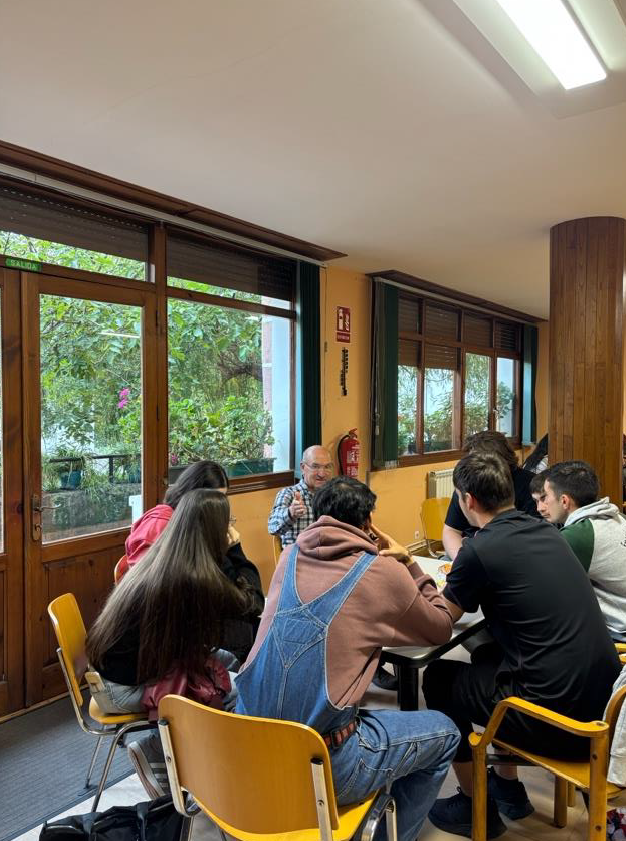
The practical activity took place over one morning, during which each group worked with one older person, under the supervision of the lecturer and socialservices professionals. Afterwards, the collected material was processed in the classroom until the Photobooks were finalised.
What was the impact on students?
To assess the impact of the workshop, questionnaires were administered before (pre-test) and after (post-test) the training.
Overall, the results show that the module largely met initial expectations. The level of interest and attractiveness of the course remained high, and students’ engagement and concentration were also maintained at strong levels.
Direct contact with older people was one of the most highly valued aspects, together with the practical nature of the activities and the opportunity to combine theory, creativity and critical reflection through the Photobook.
In terms of learning outcomes, the data indicate a notable increase in students’ perceived knowledge of ageism and social isolation, as well as an improvement in attitudes towards ageing. Students also expressed a strong intention to apply the knowledge acquired in their future professional practice, suggesting a clear potential for transferring learning into real-world contexts.
Outlook and next steps
These preliminary results will be further analysed and disseminated by the Universidad Pública de Navarra at the Foro Internacional sobre Evaluación de la Calidad de la Investigación y la Educación Superior (FECIES), to be held in June 2026.
It is also worth highlighting that 3 of the 10 Photobooks produced by students have been selected by the project partners as official Ginkgo outputs. The full set of Photobooks, together with the rest of the materials developed, will be disseminated across the different territories through multiplier events at the end of the project, with the aim of sharing the results and continuing to contribute to the prevention of social isolation among older people.
In conclusion, the Photobook workshop has shown how a well-supported training proposal, closely connected to real-life contexts, can generate meaningful learning. Initiatives such as this reinforce the purpose of the Ginkgo project: to move towards more informed, reflective and context-aware practices in work with older people.